
Inverted Tax Structure in GST: A Practical Guide
Learn what an inverted tax structure means in GST, how it blocks working capital, and the refund formula Indian CAs and businesses actually use.
Published 14 min read
You're staring at a client ledger that makes no commercial sense. The inputs are taxed at a higher rate, the finished goods go out at a lower rate, and the electronic credit ledger keeps building a balance that the business can't use up in the ordinary way. That is the practical face of an inverted tax structure in GST, and it is why the topic matters to anyone who has to turn returns, invoices, and refund claims into working cash.
For a junior CA, the trap is to treat it like a pure law question. It isn't. The law sets the conditions, but the work is reconciling purchase invoices, mapping rates, checking notification dates, and making sure the refund claim survives scrutiny line by line. India's GST framework formally recognised this problem when the regime began in 2017, and the refund mechanism has since been shaped by the CGST Act, the Rules, and CBIC's clarifications, including the 2025 change on provisional payment as recorded in CBIC's guidance.
Table of Contents
- Why an 18% Input and a 5% Output Creates a Working-Capital Headache
- Why practitioners should care
- Defining the Inverted Tax Structure Without the Jargon
- What it is, and what it isn't
- The Rule 89(5) Refund Formula Worked Through
- Where files usually go wrong
- How the Policy Evolved From 2017 to the 2022 Chapter Exclusions
- The concessional-notification point changed the analysis
- A Reconciliation Workflow CAs Can Run
- Four checks before filing
- Two Worked Examples That Show the Formula in Practice
- The concessional-notification file behaves differently
- What the 2025 Provisional Refund Changes
- Why the remaining 10% matters
- A Closing Checklist for CA Firms and Finance Teams
Why an 18% Input and a 5% Output Creates a Working-Capital Headache
A Monday-morning call from a manufacturer usually sounds simple at first. The business buys raw materials with GST at a higher rate, then sells the finished product at a lower rate, so the credit ledger fills faster than the output tax can absorb it. The result is not a bookkeeping curiosity, it's a cash-flow drag.

The phrase inverted tax structure sounds technical, but the commercial effect is plain. Credit accumulates in the electronic ledger, yet the business can't fully offset it against the lower output tax liability. Under GST, that blocked credit doesn't disappear, it stays parked until the taxpayer tests refund eligibility under the law and the refund formula in the rules.
Why practitioners should care
The issue is not just whether a refund exists. The issue is whether the client can prove it, period by period, with invoices, turnover support, and rate mapping that line up with the return filed. That's where many files become messy, because the tax story and the accounting story don't always match on the first pass.
Practical rule: if the client cannot explain why input credit is accumulating, the refund file probably isn't ready yet.
This is the right place to start if you're looking for the operational version of the topic, not a registration primer. You'll need the definition, the formula, the policy changes, and the reconciliation controls, because the refund claim lives or dies on all four. What matters most is not the label on the problem, but whether the ledger, the invoices, and the notification history tell the same story.
Defining the Inverted Tax Structure Without the Jargon
A normal GST flow is easy to picture. Inputs are taxed at one rate, outward supplies at a higher rate, and the input tax credit usually gets absorbed against output liability. The credit ledger tends to move down in the ordinary course.
An inverted tax structure works the other way around. Input goods or services carry a higher GST rate than the outward supplies, so input tax credit builds up instead of getting fully used. Under section 54(3)(ii) of the CGST Act, a registered taxpayer may claim a refund of unutilised input tax credit in that situation, subject to the exclusions for nil-rated or fully exempt supplies and other supplies kept out by notification, as set out in the CGST refund rules governing unutilised ITC refunds.
What it is, and what it isn't
The phrase does not refer to interstate trade. It also does not mean a business can average out different rates applied at different times. The test is the rate relationship, not the commercial discomfort created by the supply chain.
That distinction matters in practice. Clients often use “inverted” for any blocked credit position, even where the actual issue is an exempt supply, a nil-rated supply, or a supply excluded by notification. A refund analysis starts with the rate mismatch, then checks whether the law shuts the door through an exclusion.
For a CA, the next question is operational. Which invoices created the credit, which outward supplies generated the lower output tax, and which line items belong in the refund working? That invoice-by-invoice mapping is usually where the file either holds together or falls apart.
The Rule 89(5) Refund Formula Worked Through
The refund isn't the whole ledger balance. Rule 89(5) caps the claim with a formula that links the refund to the affected turnover, the total turnover, the net ITC, and the tax payable on the inverted-rated supplies under the CGST refund rules. In plain English, the law doesn't let the taxpayer recover every rupee of credit just because the ledger is in surplus.
| Variable | Meaning | Value (₹) |
|---|---|---|
| Turnover of inverted-rated supplies | Sales affected by the inverted rate structure | 100 |
| Adjusted total turnover | Total turnover used in the formula | 400 |
| Net ITC | Eligible input tax credit for the period | 40 |
| Tax payable on inverted-rated supplies | Output tax on the inverted-rated supplies | 5 |
Using the statutory formula, the maximum refund equals turnover of inverted-rated supplies multiplied by net ITC, divided by adjusted total turnover, minus tax payable on inverted-rated supplies. With the figures above, the capped refund works out to ₹5, not the full ₹40. That's the point of the formula, it neutralises the inversion effect, but it does not turn the refund into a windfall.
Where files usually go wrong
The two numbers that tend to create trouble are adjusted total turnover and tax payable on inverted-rated supplies. If either one is misread, the numerator and denominator stop reflecting the actual supply profile, and the recomputation won't tie to the client's working. That's why refund reviews should start with the turnover bridge, not with the finished RFD-01 draft.
A practitioner should also remember that the formula is a cap, not a promise. A ledger can show plenty of credit, but the refund claim still has to pass through the statutory proportioning logic. Once you see that, the rest of the file becomes a reconciliation exercise rather than a debate about whether the whole balance is recoverable.
How the Policy Evolved From 2017 to the 2022 Chapter Exclusions
The refund position didn't stay still after GST began. India recognised the inverted structure when the regime commenced in 2017, but the eligibility rules have been tightened and clarified through later CBIC updates, so the answer always depends on the exact rate relationship and the effective date of the relevant notification as reflected in CBIC's 2022 circular.
The 2020 clarification was important because it drew a line around eligibility. Refund entitlement depends on the input tax rate being higher than the output tax rate, and it generally doesn't arise merely because the same goods carried different rates at different points in time. That distinction matters in advisory work, because clients often point to rate history when the actual question is the rate position in the claim period.
The concessional-notification point changed the analysis
In 2022, CBIC clarified that an inverted structure can still exist where the same goods are supplied under a government concessional notification and the outward rate is lower than the input rate at the same time. That created room for refund claims in the concessional-rate setting, but only if the supplies are not nil-rated, fully exempt, or otherwise excluded by notification as stated in the circular.
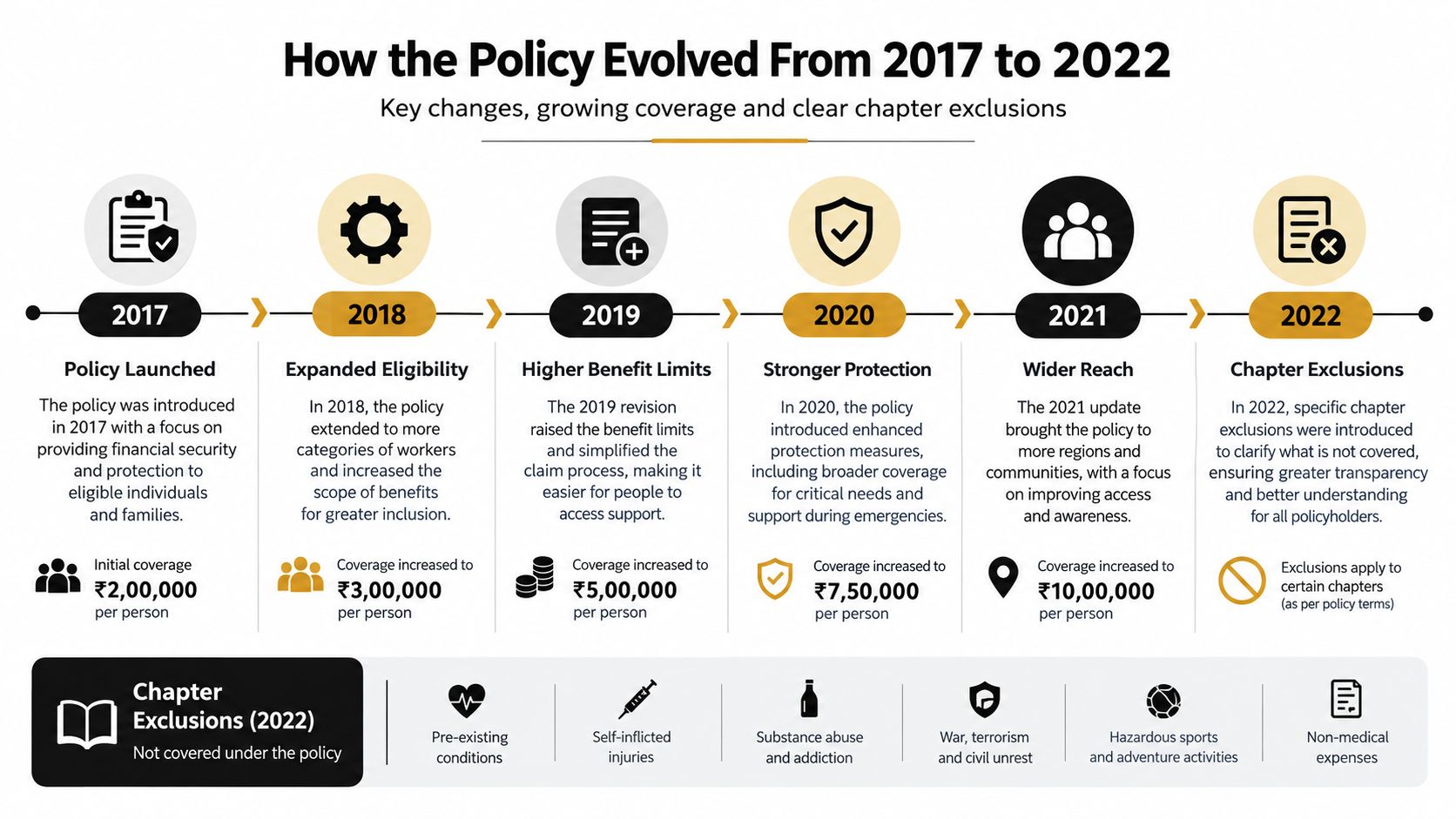
Then came the exclusion for specified goods in Chapters 15 and 27 through Notification No. 09/2022-Central Tax (Rate), effective 18 July 2022. CBIC stated that the restriction applied to refund applications filed on or after that date, while earlier filings were governed by the preceding position under the same 2022 guidance.
The practical takeaway is straightforward. Historical rate changes, classification, notification-effective dates, and filing dates all matter, and they matter together. If a CA team misses one of those dates, the claim can flip from defensible to non-maintainable very quickly.
A Reconciliation Workflow CAs Can Run
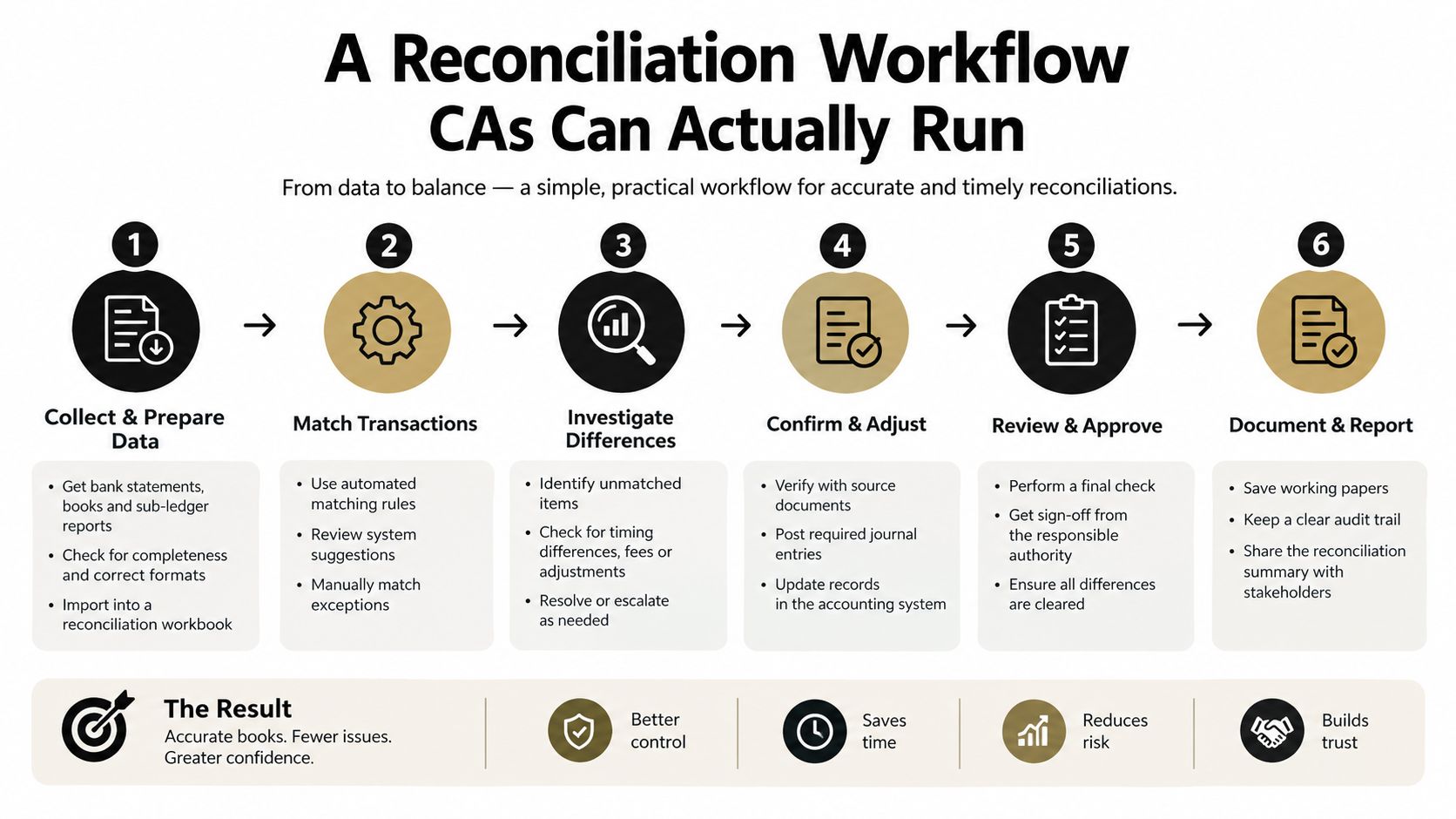
A refund claim for inverted duty should start as a controlled reconciliation file, not as a form completed at the end. Build the file around an HSN-wise rate matrix for inputs and outward supplies, a note on any concessional notification relied on, effective-date tagging for every rate change, the chapter exclusions introduced in July 2022, any ITC reversals under Rule 42 or Rule 43, and the exact RFD-01 filing period. Without that structure, the team ends up guessing which credit belongs in the claim.
Four checks before filing
First, classify ITC at invoice level. If a purchase invoice does not sit cleanly in the eligible bucket, it should not flow into the claim numerator. Second, map that credit to eligible and ineligible use, because common procurements often support both inverted and non-inverted supplies.
Third, reconcile the electronic credit ledger against the refund claim. The ledger balance and the amount you can legally claim are not the same thing. Fourth, recompute the Rule 89(5) result independently from the client's working, because a claim that cannot be reworked by the reviewer is a claim waiting for trouble.
Best practice: build the claim so every figure can be traced back to one document, one period, and one statutory assumption.
That traceability also matters when GSTR-2A or GSTR-2B, e-invoices, and e-way bill evidence are checked against return data before anyone drafts the RFD-01 narrative. Mismatches surfaced there often trigger an ITC mismatch intimation under Rule 88D and DRC-01C, so the refund file needs to show how the credit was tested, not just what total was claimed.
Two Worked Examples That Show the Formula in Practice
A classic manufacturer gives you the cleanest example. Inputs are taxed at a higher rate, outputs at a lower one, and the business sells both inverted-rated and non-inverted-rated lines. In that file, the refund is real, but it's still limited by the statutory formula, so the team has to show the affected turnover and the adjusted total turnover with care.
The practical surprise is that the claim is usually smaller than the ledger balance. That's not an error. It's the legislature saying the refund should neutralise the inversion effect, not overcompensate the taxpayer. Once that is clear, the reviewer can stop arguing with the number and start testing whether the number is computed properly.
The concessional-notification file behaves differently
Now take the case where the outward supply rate is reduced under a government notification while the input rate stays higher. CBIC has said that this can still support an inverted-structure refund, subject to the statutory exclusions and conditions in its 2022 guidance. That means the same formula may apply, but only after the team confirms the notification is operative for the goods and the period in question.
The chapter-based exclusion can wipe out that claim entirely if the goods fall within the restricted chapters and the filing date falls on or after the effective date. So the concessional case is not just a formula problem, it's a classification and timing problem as well.
| Example type | What needs to be checked | Outcome risk |
|---|---|---|
| Classic manufacturer | Input rate, output rate, turnover bridge, tax payable on inverted-rated supplies | Misstatement of formula inputs |
| Concessional notification case | Notification conditions, effective date, chapter exclusion, filing date | Claim barred by exclusion |
The key lesson is that the formula is only one filter. Rate relationship, notification status, and product classification all have to line up before the refund is safe to claim.
What the 2025 Provisional Refund Changes
The 2025 change speeds up cash, but it does not rewrite the entitlement test. The GST Council newsletter records the decision to allow a provisional refund equal to 90% of an inverted-duty refund claim, with operationalisation stated for 1 November 2025 in the Council's newsletter. The refund file still has to satisfy the same legal checks, and that matters because the provisional payment arrives before the department finishes its full examination.
The underlying eligibility rules remain in place. Rule 89(5) still applies. Invoice-level ITC mapping still applies. Adjusted turnover still has to be supported. The rate relationship still has to be right. So the work does not disappear, it shifts into two stages, provisional release first, final sanction later.
Why the remaining 10% matters
The core issue is how the team manages the balance of the claim, the document trail behind it, and the recovery risk if the final sanctioned amount is lower than the provisional amount. A Rule 92(3) SCN or an RFD-08 rejection notice can follow if the file does not hold up on scrutiny, which is why the cash benefit comes with a compliance tail. Faster money helps working capital, but it does not soften the underlying test.
The policy reduces financing pressure, but it does not cure structural inversion.
That difference matters most where inputs are shared across inverted and non-inverted supplies. Those files still need period-wise separation, correct invoice tagging, support for adjusted turnover, and a reconciliation that can stand up later. A provisional refund helps liquidity, but it is no substitute for a clean file.
A Closing Checklist for CA Firms and Finance Teams
A good inverted-duty file should be built around controls, not hope. Keep a period-wise HSN and rate matrix, tag every notification with its effective date, classify ITC at invoice level, support adjusted turnover, and recompute Rule 89(5) independently before filing. Keep provisional and final sanction tracking separate, because the 2025 change speeds up cash but doesn't lower the scrutiny on the balance.
Why this matters: each control closes a specific objection point in the refund chain.
If the claim rests on concessional supplies, check the notification conditions first. If the goods sit in the restricted chapters, confirm the filing date before the client relies on refundability. If the ledger balance is large, remember that the whole amount is rarely the claim amount.
The strongest advisory position is simple. The inverted-duty regime is a controls regime, not an entitlement regime, and the 2025 change makes that even clearer. Firms that build the file properly will defend the refund more confidently than firms that only chase the headline balance.
If you want a cleaner way to handle refund files, rate matrices, and GST reconciliation without building every workpaper by hand, visit Charter AI. It's built for Indian CA workflows where source-linked research, structured drafting, and reconciliation need to sit in one place. For inverted tax structure claims, that means less time chasing mismatches and more time testing whether the file will stand up to review.
Refined using the Outrank app